Budget 2027: Vantaa’s finances strengthen, but the path to balance still requires further measures
Vantaa Mayor Pekka Timonen has published his budget proposal for the year 2027. It is the first budget to implement the city’s new Tulevaisuus asuu Vantaalla (“The Future Lives in Vantaa”) strategy. The fiscal year result is expected to improve compared with recent years, but the deficit is still projected to be €58.6 million. The necessity and scheduling of the city’s investments have been reassessed. Tax rates will remain unchanged.
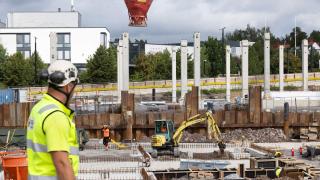
Tikkurilan osaamiskampuksen työmaa.
During the past few years, Vantaa’s finances have been burdened in particular by the generally weak economic and employment situation, subdued growth in tax revenues, and low levels of residential construction. The transfer of responsibility for employment services to municipalities, combined with persistently high unemployment, has increased the city’s costs.
Finland’s economy has now returned to growth, although the recovery remains slow. In Vantaa, economic performance during the current year has been more favorable than budgeted, but the journey toward fiscal balance remains long. The 2027 budget prepares for growing service needs and several significant costs while the city continues its efforts to balance the city’s finances.
“The most difficult phase for Vantaa’s economy appears to be behind us. This year’s result is expected to be better than forecast and clearly stronger than in 2025, which shows that the measures we have taken are having an impact. We are implementing determined actions to bring the city’s finances into balance during this council term,” says mayor Pekka Timonen.
Figures in brief
The city’s and funds’ combined operating income in the 2027 budget amounts to €430.6 million, while the operating costs amount to €1 262 4 million. Compared with the 2026 budget, the operating income will grow by 13.3% and operating costs by 3.7%. The city’s revenues will grow due to, for instance, selling business plots and social and healthcare properties. Additional resources have been allocated in the budget particularly to cover unemployment-related costs, increased demand for educational services, and higher costs from the Helsinki Regional Transport Authority (HSL).
Tax revenues and state contributions will cover around 71% of the city's operating costs in 2027. The annual contribution margin (annual surplus before depreciation) in the 2027 budget is €63.6 million, and the fiscal year deficit is projected at €58.6 million.
The fiscal year result for 2027 is expected to remain negative, as in 2026, but to be clearly better than in 2025. The weak economic situation is manifested in the municipal finances of Finland as a whole. The employment situation is the single most significant factor affecting the city’s finances, since rising unemployment not only restrains growth in tax revenues but also increases the city's costs. Nevertheless, the city’s own fiscal adjustment measures are beginning to show results, and its financial performance is improving even though the demand for services continues to grow.
Overall situation in Vantaa
Vantaa’s population will continue to grow, even though the growth is slower than over the previous years. In 2025, the city’s population increased by approximately 1,700 residents (0.7%), and in 2026 growth is expected to remain at around 1,000 residents. Over the next decade, population growth is projected to average 1.1% annually.
Residential building still remains unusually slow. The number of housing units completed in 2026 is expected to remain below 700 units, compared with more than 3,000 units annually during the early years of the decade. Furthermore, falling prices of existing homes are limiting demand for new residential development.
Even though Finland’s economy has returned to growth, the employment situation remains difficult. Vantaa’s unemployment rate stood at 14.4% in August, and long-term unemployment has reached a record high. Unemployment is increasing the city’s costs and slowing growth in tax revenues, and there are not yet any clear signs of improvement.
The 2027 budget dictates the city’s balancing of the economy
The 2027 budget is the first budget prepared under the city’s new The Future Lives in Vantaa strategy. Implementation of the strategy is supported by six strategic transformation programs approved by the city council.
The city’s economic program plays a central role in strengthening Vantaa’s financial sustainability. The objectives of the economic program are to balance the city’s finances, improve productivity, and strengthen the revenue base.
“Implementation of the new economic program is underway and will continue in the coming years. We have made difficult but necessary decisions to strengthen the city’s finances, and this work will continue through the 2027 budget,” Timonen says.
The 2026 budget included approximately €18 million in fiscal adjustment measures and next year, the city will undertake fiscal balancing measures totaling €39 million. Of this amount, €29 million will come from permanent measures, including departmental fiscal adjustment efforts, dividend and profit distributions from companies within the city group, and personnel cost savings resulting from cooperation negotiations conducted in fall 2026.
The city strategy aims to bring Vantaa’s finances into balance by 2029. Achieving this goal will require both the implementation of measures outlined in the economic program and positive developments in employment and tax revenues.
Moreover, Vantaa will implement in 2027 an organizational reform that aims to bolster the city’s operational capability in a changed operating environment and support the achievement of the city strategy’s objectives.
Vantaa continues to build the future also under tight financial conditions
The city will continue to build the future and strengthen its vitality. Meanwhile, construction of the Vantaa Light Rail, the largest investment in the city’s history, is proceeding at full speed. The light rail line is scheduled for completion in 2029, and €255 million will be allocated to the project in 2027.
“Although our financial flexibility is limited, we will continue the investments that are most important for the city’s future. We have reduced planned investments for the coming years by a total of €120 million and prioritized those projects that are most significant for Vantaa’s development,” the mayor says.
Several daycare-center and school projects will also be completed or under construction during the year. The Elmo Swimming Hall will be completed, and among projects carried out by the city group companies, the Aviapolis Upper Secondary School will also be completed.
Key investments in 2027
- Vantaa light rail
- Elmo swimming hall
- Aviapolis upper secondary school
- Tikkurila Competence Campus
- Myyrmäen Oivallustentalo (“Myyrmäki Discovery House”)
- Three new daycare centers will be completed, while several are under construction
- A new school is under construction, along with school expansion and renovation projects
Year 2027 key figures
- population: 258,668 (forecast for Dec. 31, 2027)
- fiscal year deficit: -€58.6 million
- yield per percentage point of income tax: €67 million
- internal financing of investments: 17%
- tax revenues: €2,408/resident
- operating costs: €4,880/resident
- loan portfolio: €6,700/resident
Proposed tax percentages (%)
- income tax percentage: 6.4
- public real-estate tax percentage: 1.28
- soil base percentage: 1.30
- permanent residential building: 0.41
- other residential building: 1.25
- power plant: 3.10
- unbuilt building plot: 6.00
Next
The mayor's budget proposal will progress to decision-making. The city executive board is expected to submit its budget proposal to the city council on December 1, 2026, and the city council is scheduled to decide on the budget on December 14, 2026.


