The wellbeing of children and young people in Vantaa has improved – results of the school health survey widely improved
The recent school health survey shows that the work done in Vantaa to promote the wellbeing of children and young people is producing results. The survey’s metrics show clear improvement, although there still remains work to be done.

Read the summary
The recent school health survey in Vantaa reveals significant improvements in the wellbeing of children and young people. While positive trends are evident, ongoing efforts remain necessary to further support their health and welfare.
- The survey highlights clear progress in physical and mental wellbeing among pupils and students.
- Efforts by local services in education, youth services, and wellbeing have contributed to these improvements.
- Despite gains, some areas still require targeted attention to ensure all young people benefit equally.
- The results support continued collaboration among residents, families, associations, and co-workers to promote child and youth wellbeing.
- The findings guide future actions in day care, safety, and community services to maintain and enhance positive outcomes.
Vantaa is a city of children and the young. More than half of Vantaa residents are under-40-year-olds. There are a lot of families with children and young people in the city.
Likewise, Vantaa has plenty of knowhow in the wellbeing of children and the young. The city is a pioneer in many services aimed at children and young people.
In recent years, significant resources have been added to services for children, young people, and families with children. We have been developing and introducing new procedures. The effects are now also reflected in the results of the recent school health survey.
Children and young people in Vantaa responded to the survey more diligently than before
The results of the 2025 school health survey were published in September of the same year. The results show clear overall improvement compared to the survey conducted two years earlier. The survey shows that more children and young people in Vantaa than ever before feel their health is good.
More children and young people in Vantaa than ever before feel their health is good
The response rate to the survey has also improved. It is now roughly at the same level as the national average in the survey.
In Vantaa, the number of respondents has increased by seven percentage points in all respondent groups compared to the 2023 survey. However, the response rate of students at vocational schools is still clearly lower than that of other respondent groups.
The lifestyles of tweens in Vantaa are in a better state than average
Based on the survey, health-promoting lifestyles appear to have strengthened in almost all age groups. The lifestyles of boys in particular have improved.
Health indicators declined in the Corona years, but now the drop has been overcome. The figures have almost reached the level before the Corona years.
The general lifestyles of fourth and fifth graders, such as exercise, sleeping, and eating, are in a better state than average compared to the results of the entire country. Furthermore, they experienced their health and satisfaction with life to be slightly better than other age groups.
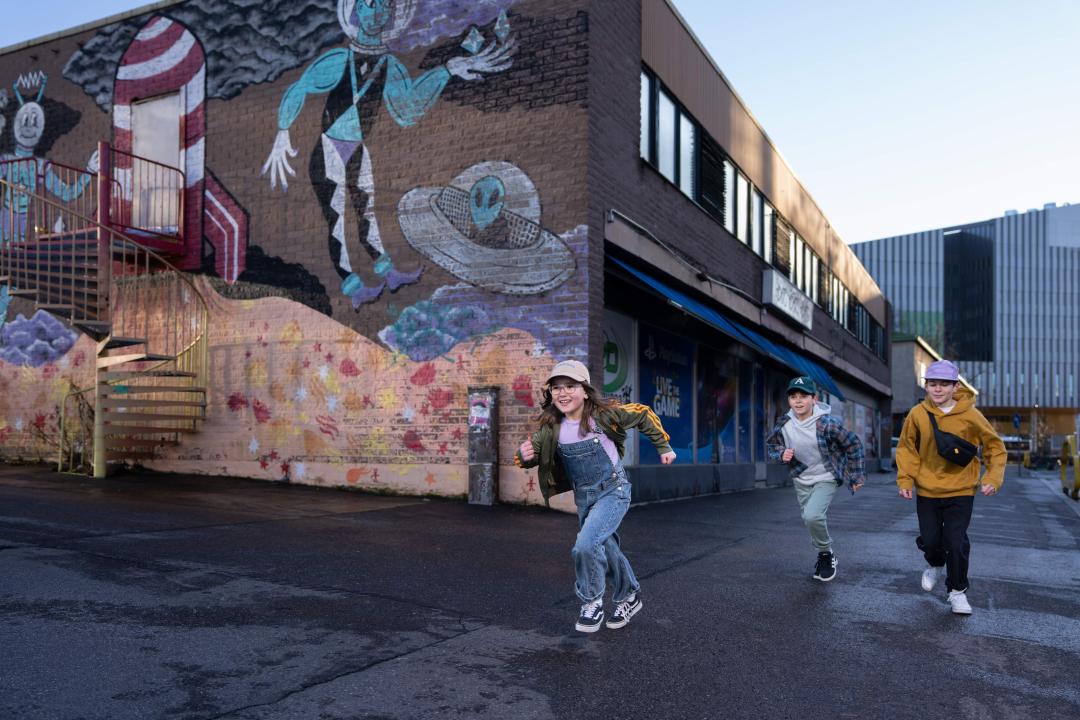
In Vantaa, children and young people have a better chance of influencing than the average
In Vantaa, children and young people feel that they have a better chance of influencing than the respondents in the whole country on average. This has improved by almost ten percentage points since the previous survey. Children and young people in Vantaa are able to participate, for example, in planning the matters related to their own school.
Children and young people meet decision-makers annually at the Movers & Shakers Day event
Vantaa uses the Skididialog discussion model for children and young people, which promotes dialogue and brings together children, young people, and adults to discuss as equals and constructively.
The city has organized an annual Movers & Shakers Day for children and young people over fifteen years. There, they meet the city's decision-makers and experts and have the opportunity to influence the city's services and future. The next Movers & Shakers Day will be held in April 2026.
The Movers & Shakers Day is also part of the City of Vantaa's Child-Friendly Cities work. The aim of the work is to ensure that the rights of children and young people are implemented in the city's decision-making and services.
UNICEF Finland awarded the City of Vantaa the Child-Friendly City recognition in 2024.
The experience of loneliness is decreasing – more and more people have at least one friend
The experience of loneliness among children and young people has decreased. Almost all (99%) respondents in the fourth and fifth grades of basic education say in the survey that they have at least one good friend.
Nevertheless, girls experience significantly more loneliness than boys. Thirty-four percent of girls in vocational schools feel lonely, while the corresponding figure for boys is 18 percent.
Girls experience significantly more loneliness than boys
A lot of work is being done in Vantaa's schools to combat loneliness. In the course of 2026, a guide to reducing loneliness will be completed in collaboration with children and the young. The request for the guide came from children and young people.
The guide will specifically compile children's and young people's own tips for combating loneliness and fostering the sense of community. Tips will be collected directly from schools and daycare centers.
The guide to reducing loneliness to be implemented with children and young people will be published in 2026
The guide will be distributed to daycare centers, schools, and educational institutions. Its content will be presented at the Movers & Shakers Day event in spring 2026, where 100 children and young people will have the opportunity to discuss the topic directly with decision-makers.
Enthusiasm for school is on the rise and life satisfaction has increased
The enthusiasm for school experienced by children and young people has become more widespread in all age groups. For example, almost half (48%) of fourth- and fifth-graders in basic education are enthusiastic about going to school. This is an improvement of almost ten percent compared to the previous survey.
More than half of the respondents receive positive feedback from their teachers and feel that the teacher is interested in them.
Girls' life satisfaction in particular has improved since the previous survey. Clearly more than half (63%) of girls studying at vocational schools reported that they were satisfied with their lives. The figure has improved by almost ten percentage points since the previous survey.
Girls' life satisfaction has improved, but boys are the most satisfied of the respondents
In all respondent groups, boys are the most satisfied with their lives. Eighty-three percent of primary school students feel that they are satisfied with their lives.
Girls' social anxiety has decreased, although about every second girl still experiences social anxiety. On the other hand, social anxiety among boys studying at secondary school has become somewhat more common.
A clear majority of respondents feel safe at school
Eighty percent of primary school students and 90 percent of secondary school students feel they can be themselves at school. Boys find it easier than girls in almost all educational levels included in the survey.
The vast majority of all respondents feel safe at school. The proportion of these students among respondents is 81–96 percent, depending on the educational institution.
Emotional skills training starts in Vantaa already in the daycare center
A lot of work is being done in Vantaa's early childhood education, schools, and educational institutions to ensure well-being and learning conditions.
Emotional skills training, consideration of others, and giving positive feedback start in Vantaa already in the daycare center. They are supported by emotional skills teaching, as well as the ProVaka and ProKoulu activities that promote these skills.
Discrimination and bullying are slightly more common in Vantaa than in Finland on average
Despite the measures Vantaa has already taken, discrimination and bullying are somewhat more common in Vantaa than in Finland on average. The proportion of respondents who have experienced discrimination has increased from the previous year. In particular, the proportion of boys has increased.
Experiences of discrimination among girls in upper secondary education have clearly decreased
However, experiences of discrimination in upper secondary education have decreased from before.
Nineteen percent of girls studying at a vocational school say they have experienced discrimination at school or during their free time. In 2023, the corresponding share was 35 percent.
School coaches prevent discrimination
Respondents with a foreign background experience discrimination more often than respondents with a Finnish background. The differences between schools are also noticeable.
The integration of children and young people with foreign backgrounds into school life is supported by a strong network of school coaches and multilingual instructors in Vantaa.
School coaches do not do teaching work but help in various interaction situations. They are present among children and young people and also intervene in bullying and disputes. There are school coaches in over twenty schools in Vantaa.
In addition, youth workers at educational institutions offer help in everyday situations.
If necessary, they help young people achieve their learning goals or refer students to other services.
Multilingual tutors help students understand cultural differences
Vantaa also employs multilingual tutors. They speak common languages such as Albanian, Arabic, Russian, Estonian or Somali, in addition to Finnish. They act as cultural interpreters between schools and homes and help students with their schooling.
A multilingual tutor can help with drawing up a learning plan or participate in an assessment discussion
A multilingual tutor can, for example, draw up a learning plan for a student, which can help the student develop important things for them or even improve their grades. If necessary, the tutor can participate in the student's assessment discussion or refer them to a service that supports learning, such as a homework club.
The tutor can also help the student's guardian get acquainted with the school system or advise the guardian on school-related tasks.
Multilingual tutors work in several different schools. Their work is mainly directed to where the need is greatest.
In Vantaa, teachers are trained to recognize bullying
In Vantaa, a training package on anti-bullying work has been developed for school professionals. Training is offered to all service areas from early childhood education to the second level.
The work against bullying is also reflected in the survey. Many children and young people who have previously experienced bullying have now reported that bullying has decreased. Sixty-seven percent of eighth- and ninth-graders say that bullying has decreased or stopped after they told their teachers about it. The corresponding figure for the whole country is 61 percent.
Seventy-four percent of eighth- and ninth-graders say that they have not been bullied at all. The proportion has improved by three percentage points since the previous survey.
There still remains much work to be done in preventing bullying and intervening in bullying. Eleven percent of fourth- and fifth-graders say that they have been bullied at least once a week. The proportion has not improved in two years.
For eighth- and ninth-graders, the figure has decreased by one percent since the previous survey and is now nine percent.
According to the survey, bullying in junior high school most often involves name-calling or shaming. Among high school students, the most common form of bullying, in addition to name-calling and shaming, is spreading lies, and bad language. In vocational schools, bullying most often takes the form of spreading lies or bad language.
Bullying is addressed both in groups and individually
In comprehensive schools, bullying situations are investigated not only by teachers but also by intervening in bullying teams.
Schools can receive support in resolving difficult and prolonged bullying situations from K-0-trained employees. Their main job is, for example, the work of a teacher or curator, but they are trained in K-0 work.
K-0 work means resolving situations that have reached a point of no return and have expanded. In addition to their own school's anti-bullying work, they can also come to another school to investigate a bullying incident.
When investigating a bullying situation, school experts engage in tight dialogue with the guardians and share information on the progress of the issue to all parties concerned.
Concrete measures to prevent bullying include organizing groups, discussing class rules together, and providing positive feedback on following the rules. Teachers and students create the class rules together.
The Someturva service also helps in intervening in bullying. Vantaa's 3rd – 9th-graders can contact the service anonymously. Someturva provides help with online and social media bullying.
All the City of Vantaa premises have adopted the safer space principles. A safer space means a space where everyone can be themselves without fear of discrimination, exclusion, or inappropriate treatment. The city ensures that respect for others, inclusion, and equality are realized.
Substance use is on the decline
Young people in Vantaa use fewer nicotine products and alcohol than the national average. Substance use appears to be on the decline overall.
About 80 percent of junior high school students and half of upper secondary school students report that they never drink alcohol. The use of illegal drugs has also decreased among young people. Smoking, snuffing, and using electronic cigarettes have likewise decreased.
However, the use of nicotine pouches is increasing, especially among those studying at vocational schools, of whom about a quarter (24%) report that they use nicotine pouches. This is an increase of ten percentage points compared to the previous survey.
Experts are concerned about the increase in the use of nicotine pouches. Young people's brains are still developing, which makes them susceptible to nicotine addiction. However, information is available in schools and youth work, and for parents, for example, at PTA evenings related to substance abuse education classes.
Practicing emotional and safety skills in early childhood education is an important part of preventing substance abuse in later life
In Vantaa, preventive substance abuse work is carried out extensively in cooperation with various actors. Student welfare supports young people individually, and the focus is on early intervention. Furthermore, practicing emotional and safety skills in early childhood education is another important part of preventive work.
According to Vantaa's preventive substance abuse experts, changing attitudes have contributed to the decrease in substance abuse among young people. Young people now have a more positive attitude towards health than earlier. Parents are also more interested in how young people spend their free time and are also better informed about it than before. This supports young people's abstinence from substance abuse.
Comprehensive youth work and long-term preventive work by schools and organizations promote abstinence from substance abuse. The city supports a positive, substance-free youth culture through leisure services.
Community-based student welfare, among other things, prevents bullying
The city develops and implements community-based student welfare together with the Vantaa and Kerava wellbeing services county (VAKE).
Community-based student welfare focuses on the health, interaction with others, participation, and safety of children and young people. Prevention of bullying, violence, and harassment is one of the important goals. Joint training is organized for those working with children and young people on this and substance abuse work.
Lessons on developing mental health and interaction skills are carried out with experts of the wellbeing services county. Cooperation is also carried out, for example, with parents' associations and their umbrella organization.
The wellbeing services county also conducts a substance abuse survey every other year. Its results are used in planning services together with the city.
Youth workers are perceived as safe and present adults
Vantaa organizes a wide range of events, hobby opportunities, and meeting places for children and young people. The city has a total of 14 youth centers and Kulttuuritehdas for young people in Vernissa.
The youth centers are open 3–4 evenings a week, and admission is free. The safer space principles are applied to the youth centers. All activities are free of charge.
According to surveys conducted among young people, the most common reason for young people to come to a youth center is to meet friends. Youth workers are in second place. They are perceived as safe and present adults.
Youth centers offer opportunities for playing billiards or other games, cooking, and having fun without drugs. Young people are involved in all planning and implementation of the activities.
Youth workers also meet young people at stations, streets, and shopping centers
Vantaa carries out outreach youth work, for example, at train stations, streets and shopping centers, but also in schools. In outreach youth work, young people are met in their everyday lives and, if necessary, supported, and directed to other services.
Hobby activities are an important part of youth work. There are dozens of different hobby groups. The Harrastusten Vantaa (Vantaa of Many Hobbies) model and the City of Vantaa Children and Youth Festival Fund also promote hobby opportunities for young people.
Thanks to Vantaa of Many Hobbies, Vantaa's comprehensive school children have easy access to low-threshold hobbies. They are free of charge and often easily accessible to participants. The recreational opportunities offered to elementary school students are always organized in connection with the school day and on school premises.
Most young people are doing well – a small number of young people need more support than before
In general, young people in Vantaa are doing better than before. Most young people are doing well. However, young people who have many challenges in their lives are now doing worse than before. This is reflected both in the results of the school health survey and in the observations of social services and the police.
The school health survey is carried out every two years
- Every two years, the Finnish Institute for Health and Welfare (THL) carries out a school health survey containing over two hundred indicators for Finnish schoolchildren and upper secondary school students.
- The survey is answered by fourth-, fifth-, eighth-, and ninth-graders of basic education, as well as by first- and second-year students of upper secondary schools and vocational schools.
- Data has been collected from students in the eighth and ninth grades of basic education since 1996. The other groups of pupils and students have joined later.
- Almost 11,000 children and young people from Vantaa participated in the spring 2025 survey. The response rate of Vantaa residents has improved, but, with the exception of upper secondary school students, it is slightly lower than the national average.
- The results of the survey will be used in Vantaa in decision-making and in the planning and development of educational institutions. The results will also be taken into account in cooperation between schools and homes, and when making student welfare plans. The purpose of the plans is to ensure that students receive the support they need to promote physical, mental, and social well-being.


