Swedish language immersion
Introduction
What is language immersion?
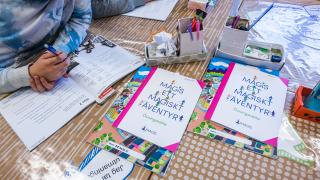
Swedish-language immersion is a teaching method in which children learn Swedish by hearing and listening it and using it in daycare and at school. Language immersion teachers speak Swedish with the children. The child may use Finnish too at first, but they are encouraged to use the immersion language from early on. The personnel communicate with guardians in Finnish.
Pupils learn the language via thematic work, stories, songs, rhymes, and play. The aim is to rouse the children’s interest and create a positive attitude towards a new language. Early foreign language teaching capitalises on children's sensitivity to language learning and makes them eager to learn foreign languages.
Language immersion classes follow the school’s general curriculum. In the first grade, all teaching takes place in Swedish, and the students will first learn to read and write in Swedish. Teaching of mother tongue will start in the second grade. The language immersion classes also familiarise the students with Swedish culture and the culture of Swedish-speaking Finns.
Learn more about the language immersion on the Finnish language version of this webpage. Choose the language in the top right corner.
For whom is language immersion teaching meant?
This type of teaching is for children who do not speak Swedish as their mother tongue. Having sufficient Finnish skills is important for a pupil in language immersion. You must commit to immersion studies for the entire language immersion path.
Guardians must provide a positive attitude towards the immersion language and support the pupil in their studies. The child starts language immersion when entering early childhood education or pre-primary education and stays in the immersion class for the entire duration of basic education (grades 1–9).
Video: Swedish language immersion in Vantaa (In Finnish)
Errandservices
Wilma application
Wilma is an electronic service which is a communication tool used between the schools and home. In Vantaa, Wilma is used both in basic education and high schools.